
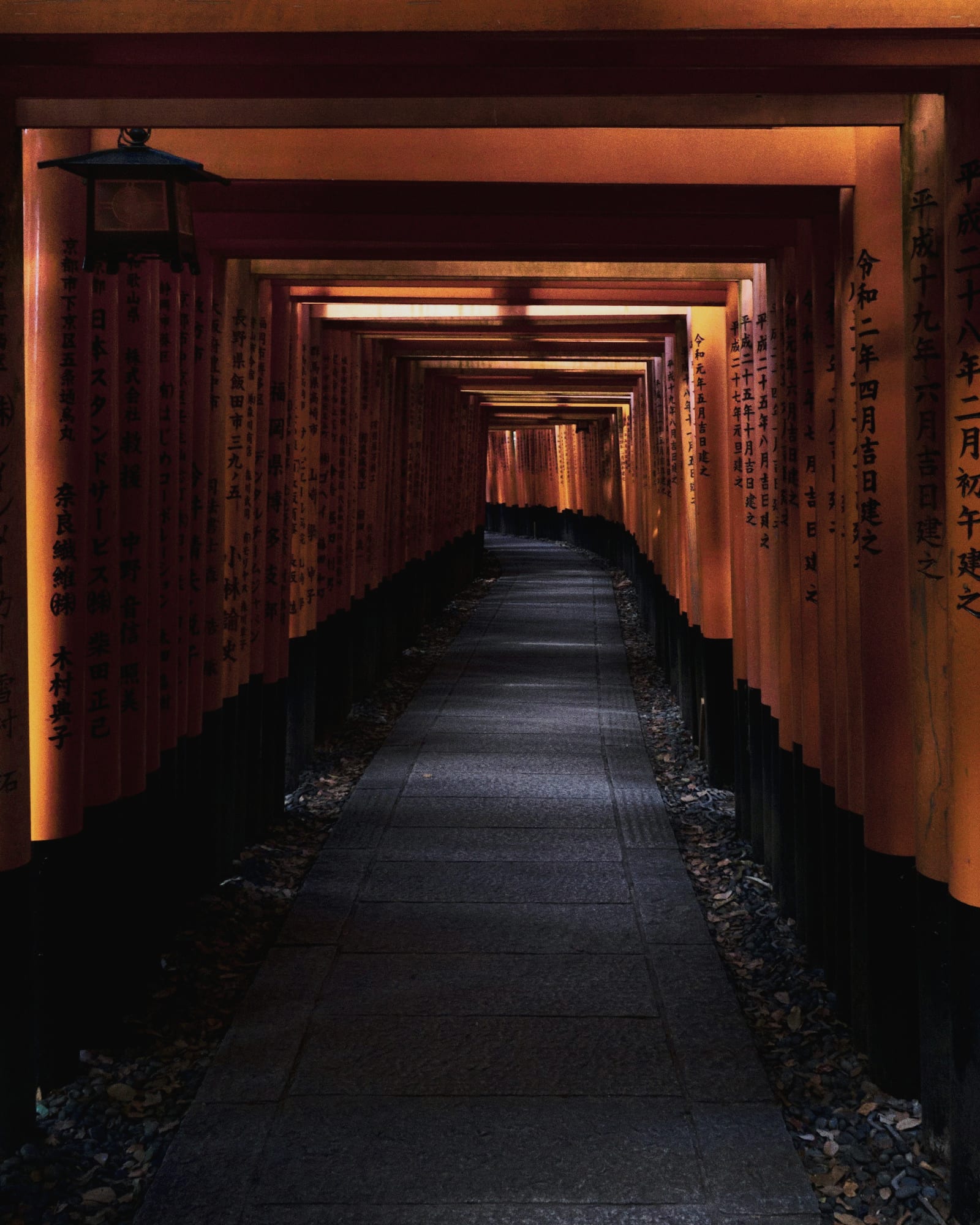
The old capital keeps its own hours.
Kyoto was the capital of Japan for eleven centuries, and it still keeps that pace. Seventeen of its sites hold UNESCO listing; some sixteen hundred temples sit inside the city. The difference between a good week here and an ordinary one is rarely the list. It is the timing. Which gate opens at dawn, and which tea house answers the phone.
That timing is the part we hold. Two Founders, one phone number, from the first enquiry to the car waiting at Kansai. We answer within twelve hours.
Why Our Clients Go
Our clients come for what the city keeps back. The tea houses of Gion still turn away anyone without an introduction, ichigen-san okotowari, no strangers at the door. An evening with a geiko or a maiko is not for sale; it is vouched for. We have spent years earning the introductions, and we make them.
We know which temples open before the crowds arrive. A moss garden to yourself at seven in the morning, an abbot's private rooms, a tea master who sits with you and no one else. Saiho-ji, the moss temple, admits only by written application filed weeks ahead, and we file it. The best kaiseki counters seat eight, and Hyotei has done so for four hundred years. We hold the seats.
The seasons here answer to no one. Cherry blossom cannot be booked, and the maples turn on their own week, not the calendar's. We build a window with room to move inside it, and we watch the forecast so that you need not.
How We Arrange It
- 01Flights first. The JAL First Class Suite or ANA 'The Suite' from Heathrow to Tokyo Haneda; from Los Angeles, San Francisco and New York, the same carriers in first and business. Kyoto has no airport of its own, so we route you either onto the Green Car of the Nozomi Shinkansen, Tokyo to Kyoto in two hours and fifteen minutes, or direct into Osaka Kansai and in by road.
- 02A private car meets the aircraft. Kansai to the city is seventy-five minutes. From Haneda, a guide-driver sees you to the platform and your luggage to the Green Car, so you carry nothing between rail and room.
- 03Aman Kyoto, set alone in a forested garden north of the city, or Hoshinoya in Arashiyama, reached by private boat up the Oi River. The Park Hyatt above Kodai-ji in Higashiyama, or a corner suite at the Ritz-Carlton over the Kamogawa. We name the room and the view, never the category.
- 04A private evening in a Gion tea house that takes no first-time guests without introduction. A geiko, a maiko, and a room that seats eight.
- 05A moss garden to yourself before the gates open, a tea master for the morning, and a counter seat at Kikunoi or Hyotei, the latter four centuries in the same family.
When To Go
Cherry blossom, late March to mid-April
The bloom is a moving target, worth a plus-or-minus three day window rather than a fixed date. The weeping cherry at Maruyama Park, the Philosopher's Path along the canal, the Keage Incline under petals. Rooms go a year ahead, so we hold them speculatively and confirm as the forecast firms.
Autumn maples, November
The momiji peaks in the third and fourth weeks, later than most expect. Tofuku-ji's Tsutenkyo bridge over a valley of red, Eikan-do lit after dark, Arashiyama at first light before the coaches. The single busiest fortnight of the Kyoto year, and the one we book earliest.
Winter quiet, January to February
Snow rarely settles, but when it does the Golden Pavilion against white is the image people carry home. Empty temples at dawn, plum blossom at Kitano Tenmangu in late February, and kaiseki at its most serious in the cold months. The connoisseur's season.